
Last week, we featured the profoundly moving sonnet that is the first part of George Herbert’s poem, Christmas. You may remember that it begins with the speaker’s own weariness — as I’ve written in one of my own poems, “Exhausted, from pursuit of happiness.” That’s what Herbert called, with remarkable shrewdness, “the grief of pleasures.” But Christ is waiting for him. He not only occupies the inn where we travelers might find rest. He himself is that place of lodging. The sonnet ends, you might say, on a minor key, as the speaker begs Christ to make him into the fit lodging for his Savior: “Furnish and deck my soul, that thou mayst have / A better lodging than a rack, or grave.” What a brilliant touch that is! The “rack” of the feeding trough, in that hollow of stone where the cattle are kept, is made one with the other place we human beings gave to our Lord to lay his head: the tomb. Stable and tomb thus bracket the life of Christ, before the Resurrection.
But we know that neither the stable nor the tomb can hold the Lord. That’s why even Christmas carols in a minor key, such as “God rest ye merry, gentlemen,” are rousing and triumphant. George Herbert too was not going to leave his poem in sadness. So then, after that sonnet, we get a poem about composing a fit hymn for Christmas, and the poem itself is a hymn — and that’s our Poem of the Week, the second and triumphant half of Herbert’s poem. It’s not a sonnet. It’s meant to be joyfully musical, in rhyming couplets of iambic pentameter (5 strong beats) and trimeter (3 strong beats), till the concluding couplet, both lines in pentameter.
Who’s going to compose and sing the hymn? We need shepherds, right? Herbert says that his soul is a shepherd. What sheep does he tend? “Thoughts, and words, and deeds.” That’s in ascending scale of action: we think, we speak, we do. If God were to abandon us to ourselves, we might as well be breeding wolves to devour our enemies, wolves that would turn right back on us when they’d done with their bloody work. But God does not abandon us. He showers his grace upon us: those are the streams of living water that refresh the flock. Now let’s think about this. Shepherd and flock, the soul of man with his thoughts and words and deeds, are thus steeped in divinity: Christ who entered the world enters the soul, or penetrates it like a liquid that nothing can withstand. When that happens, it isn’t just that the soul lives. The soul lives in and through Christ, so that when the poet now composes a hymn, there isn’t any way to distinguish what the soul brings and what the Savior brings: it’s all the work of the poet, and all the work of Christ, and that’s what we get in those stunning final lines.
Only the Son can bring such a morning to pass! Yes, the Son is himself the Sun, that daystar that rises never to set.
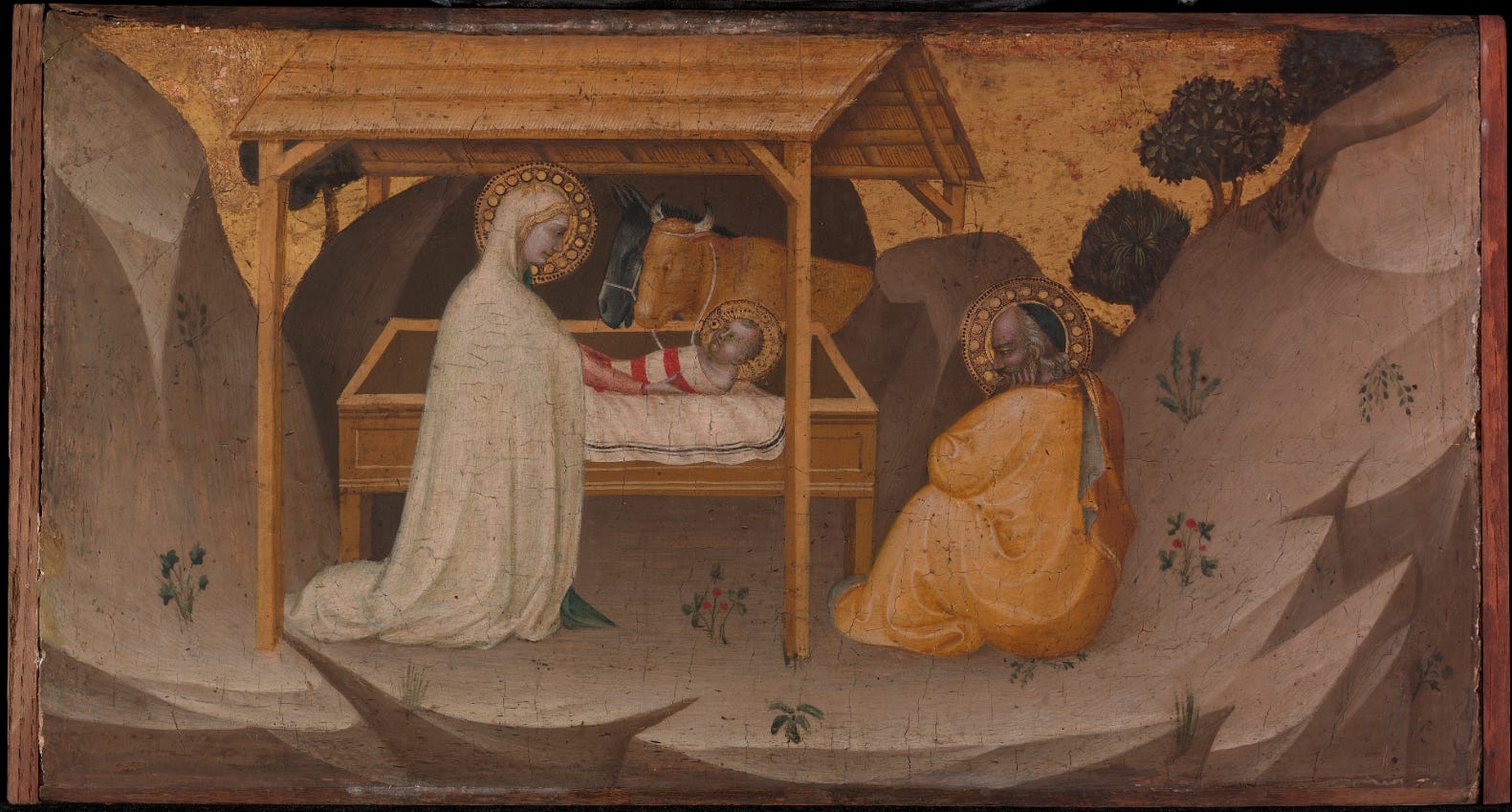
The shepherds sing; and shall I silent be?
      My God, no hymn for Thee?
My soul's a shepherd too; a flock it feeds
      Of thoughts, and words, and deeds.
The pasture is Thy word: the streams, Thy grace
      Enriching all the place.
Shepherd and flock shall sing, and all my powers
      Outsing the daylight hours.
Then will we chide the sun for letting night
      Take up his place and right:
We sing one common Lord; wherefore he should
      Himself the candle hold.
I will go searching, till I find a sun
      Shall stay till we have done;
A willing shiner, that shall shine as gladly
      As frost-nipped suns look sadly.
Then will we sing, and shine all our own day,
      And one another pay:
His beams shall cheer my breast, and both so twine,
Till even His beams sing, and my music shine.Looking for a last-minute Christmas gift? Here’s our best FOREVER discount is on for Gift Subscriptions to Word & Song. Use the button below to schedule your gift of a daily dose of the good, beautiful, and true with family and friends.
And here’s a printable gift certificate for those who would like to use it.


