


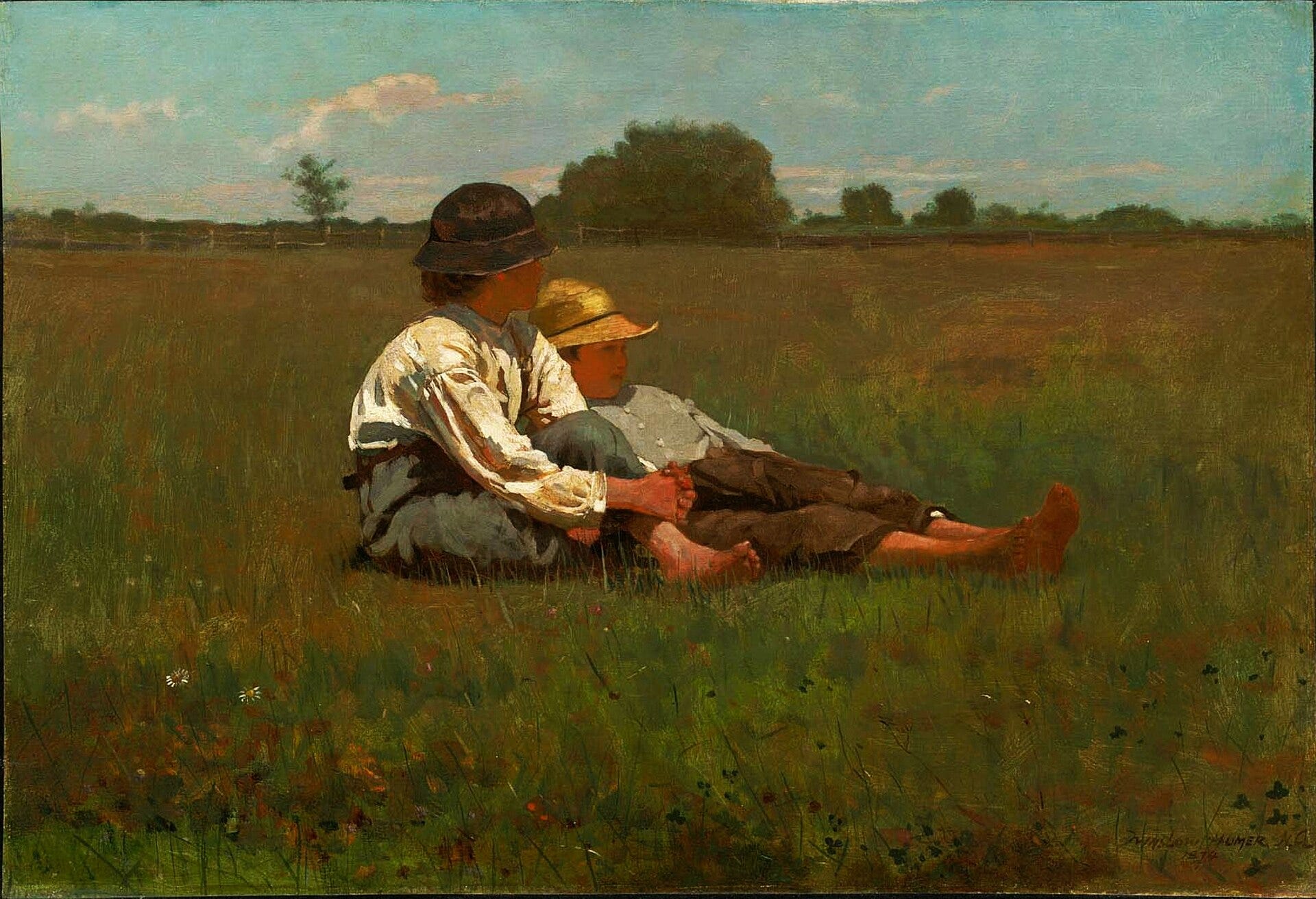
Dear Readers: While I was looking over our Poem of the Week “The Song of Marion’s Men,” by William Cullen Bryant, I came upon a longer poem, “The Prairies,” which I would like to recite for you, as I think it is tremendously powerful and warmly human — and, besides, a work of English poetic art that will stand the comparison with Wordsworth and Milton, who were so obviously Bryant’s leading lights. The scene is this. Bryant has come to the prairies, those vast grasslands that extended from Ohio in the east to Colorado in the west, and from Mexico in the south all the way up to the Peace River valley in northern Alberta. He has never seen them before. They are like a great sea, apparently made of motionless billows, until the wind passes over them, and then he sees that they are teeming with life. He imagines that on these plains, a civilization once flourished, the builders of the great mounds that you may still see along the Ohio River. That was the common opinion then; and the Mound-Builders were swept away by the coming of the red man, the Indians; and they too, with the bison, are now being swept along to the west. In their wake, a new people, he imagines, are about to arrive — Bryant says he can almost hear the laughter of the children, the wooers singing their love songs, and the Sabbath hymns in the churches yet to be built. The moment passes, and the final line returns to solemn reality: “And I am in the wilderness alone.”
One linguistic point: the word “desert” here does not mean “dry sandy place,” but a deserted place, uninhabited. For the prairies are filled with life.
We think of our archive as a little treasure trove. Our paid subscribers have on demand access to the entire of Word & Song, many hundreds of entries. For everyone else, there’s always plenty to see here, as well. We hope that all of our readers will revisit and share our posts with others as we continue our mission of reclaiming — one thing at a time — the good, the beautiful, and the true.


