


We’re at the base of an island mountain in the morning, with the great vast western ocean all around us. The sun’s shining in the northern part of the sky, because we’re south of the equator, exactly opposite to Calvary on the round earth, in latitude and longitude. A man in his prime, blond, with the deep marks of a wound on his chest and over his brow, is about to ask the pilgrim Dante to pray for him and to beg his daughter to do so too, when Dante returns to the world of men. The man’s an amiable fellow. It’s something of a wonder that he’s here at all, this Manfred, son of the emperor Frederick II. He, like his father, had been excommunicated from the Church — Frederick managed that feat twice. Frederick was nicknamed Stupor Mundi, “The Wonder of the World,” for his intelligence and his culture, which of course would not suffice to keep him out of the everlasting bonfire down below. Everybody thought that Manfred would follow him there, like father, like illegitimate son.
So when Manfred died in battle, the bishop of Cosenza, which was the imperial capital, had his body removed from the cairn his followers had heaped above him, and cast it just beyond the bordering River Tronto, expelled from his native soil. But Manfred calls us to think of the arms of Jesus spread wide on the cross, and he says that, excommunication or no, as long as there’s still some green in the bud of hope, you are not beyond the grace of God. And there we’ve got a suggestion of our Word of the Week, evergreen. Manfred doesn’t say that man’s hope is always alive — but the grace of God, if we would accept it, is certainly always alive, always green, always young. That’s why the French poet Charles Peguy portrayed hope as a little girl, leading faith and charity along her merry way. It’s why Dante uses the symbolic colors of the three great virtues: white for faith and its purity, red for charity and its fire, and green for hope — green for that young and living hope.
I wonder what it’s like to live in a world without much green. I’ve just read an account in one of my issues of the old Century Magazine (from 1887), of a Greenlander native, an Eskimo named Jens, who one day did something out of character. For he had been always reliable, cheerful, hard-working, and loyal to his English and Danish commanders. But one morning they couldn’t find him in camp. This was far along the northern coasts of that vast island of ice. He was seeking a land which his father said he saw once, a land sheltered in the interior, a place where grain grew, and the trees were as tall as a man — imagine that! And there was warmth, and the color green. The Greenlanders did love their green, what they could find of it — mainly the arctic willow, a tree that grows only a foot high, but its spring leaves are sweet and richer in vitamin C than an orange. Well, Jens’ friends found him and brought him back, at peril of all their lives, and he remained tractable for a couple of years, but again one day he sought that green and pleasant place, and was seen no more.
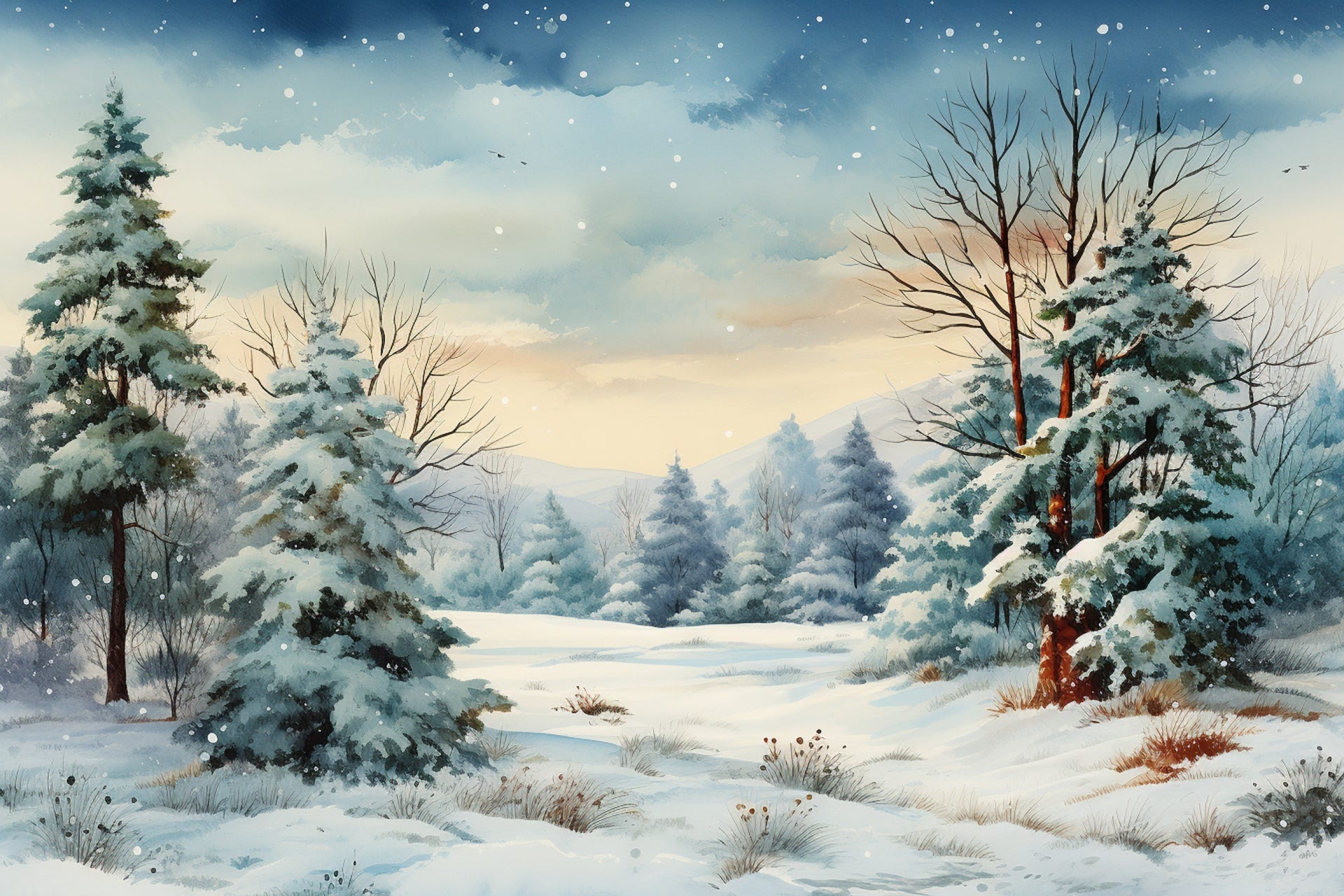
We in our northern temperate climes are never without green. That’s because the conifers don’t shed all their needles, and those are always green, from the pleasant mild green of the hemlock, to the rich green of the pine, and the dark green of the fir and the spruce. In Nova Scotia, where we live for part of the year, one of the conifers, the larch or tamarack, does drop its needles, which first turn a striking amber yellow, impressive against the true evergreens. Now, both parts of the word are interesting. The green springs from an ancient root having to do with growing, and that word too is a cousin, as is grass. Of course, it’s not always good to be green: a teenage girl gone dotty with infatuation is called greensick, and if you’re a recruit in the army and you don’t know what you’re doing, you’re called green, like a fresh sprig. Then there’s the English phrase “green with envy,” as if you had gone sour just because someone else was happy. But in general, it’s good to have green things around, and I’ve heard that green is the color most restful to the eyes, either green or the light blue of the sky. Then there’s the ever. Or rather the first syllable: that’s from Old English ece, ege, ae — which became early Modern English aye, pronounced with a long A, in the phrase “for aye,” meaning “forever.” It comes from the same Indo-European root that we find in the first syllable of eternal.
So where there is life, eternal life, the heart beats strong, the eyes see clear, and the fields are ever green.
Our best FOREVER discount is still on for gift subscriptions to Word & Song. Use the button below to schedule your gift of a daily dose of the good, beautiful, and true with family and friends.
Word & Song by Anthony Esolen is an online magazine devoted to reclaiming the good, the beautiful, and the true. We publish six essays each week, on words, classic hymn, poems, films, and popular songs, as well a weekly podcast, alternately Poetry Aloud or Anthony Esolen Speaks. Join us as a paid subscriber now during our Christmas Special Forever Rate.

We think of our Word & Song archive as a little treasure trove, and we hope that our readers will revisit and share our posts with others as we continue our mission of reclaiming — one good thing at a time — the beautiful and the true. For access to audios, podcasts, and on demand to our full archive of around 1,000 items — or just to keep our mission going! — please upgrade to support Word & Song us as a paid subscriber


